
Why Empathetic Brands Win
The Difference Between Making an Impact and Getting Lost in the Noise

What Is Empathy?
My mom is the college counselor at the local high school. In addition to her responsibilities advising adolescents, she also serves on the college scholarship committee. Each year, she helps select a group of high-potential students to receive scholarships to college.
During the latest round of scholarship interviews, the candidates were asked to: “Define empathy and provide an example of how you have demonstrated it.”
The students were more or less able to define empathy, which Google describes as “the ability to understand and share the feelings of another.” However, none were able to provide an accurate example of how they’ve personally showcased it. Responses largely centered around selfless actions, such as helping people in need (e.g. assisting the elderly, tutoring a classmate).
Why did they have difficulty providing an example? Because eliciting empathy is hard. We see life through the lens of our own experiences. As such, it’s often difficult to understand other people's perspectives or “place yourself in someone else’s shoes.”
How Brands Cultivate Empathy
This story prompted the following thought, if establishing person-to-person empathy is challenging, fostering business-to-consumer empathy is an even greater feat.
The emotional ties formed between brands and consumers has always fascinated me. Strong connections can provoke passionate consumer responses such as “we have a connection that cannot be broken” (re: SoulCycle) or “thank you for seeing me” (re: Ben & Jerry’s). Out of context, these remarks resemble a conversation between romantic partners, not something you would say to a business. However, people do speak to/about businesses in this way.
Why is this? Individuals can feel genuine emotions towards the brands they interact with. I believe empathy is a key ingredient in establishing an emotional connection between brands and consumers.
It’s part of human nature to want to feel connected to and be understood by others. In fact, medical professionals argue that our well-being depends on our connections with others. Research from Harvard Medical School suggests “good connections and social support can improve health and increase longevity.”
Indeed, it’s challenging for brands to master empathy and maintain emotional bonds with their consumers. Only a handful do it well. However, when done right, the resulting connection is often the difference between making an impact and getting lost in the noise. I see winners employing the following strategies:
Be the customer. A founder that creates a product from an authentic personal need—that solves a pain point or creates delight—can prove exceptionally impactful. Such founders have the ability to understand their consumers on a deeper level because they have walked in their shoes.
Take, IT Cosmetics, for example. The beauty brand’s founder, Jamie Kern Lima, suffered from rosacea—a skin condition that causes redness and visible blood vessels in the face. As a news anchor, she struggled to find makeup that was able to conceal her imperfections and stand up to the harsh HD cameras. In 2008, Lima founded IT Cosmetics to provide a solution to her personal pain point.
To market the product, Lima made regular appearances on QVC and personally demonstrated how the makeup worked for her. While on the air, Lima would expose her rosacea and show how the IT Cosmetics concealer seamlessly covered up her redness. Lima’s ability to empathize with consumers’ skin challenges helped drive the brand’s success. In 2016, beauty-giant L’Oréal acquired IT Cosmetics for $1.2 billion.
 eva h hill@evahhillYou were vulnerable and completely authentic, two qualities the world is looking for.
 Jamie Kern Lima @JamieKernLima📢It wasn’t until I got real and took my makeup off exposing my rosacea on live television that I truly felt free. And the goal of normalizing all types of beauty, and shift the beauty industry norms inspired me to create IT Cosmetics. @melrobbins9:37 PM · Aug 30, 2020


Brand humanization. For brands, personification—living and breathing your market position—allows consumers to understand the business’ values and points of differentiation. While brands are often hyper-focused on understanding their consumer, it’s equally as important that your consumer understands you.
A great case study is the female personal-care brand Billie. Billie’s advertising campaign, “Project Body Hair”, broke the unspoken rule of female razor advertising by actually showing body hair in their ads. Surprisingly, Billie’s was the first brand to do so. For the past century, industry incumbents have portrayed women shaving perfectly smooth legs. The rules of the game seem unbreakable—until someone comes along and changes them.
Billie’s playful portrayal of “real women” resonated with consumers and illustrated the company’s mission to “champion womenkind” as they are. Billie’s choice to show female body hair in its advertising not only established an authentic and unique brand voice, but also instilled a sense of falseness in industry incumbents’ messaging.
The ads attained over 22 million video views and the campaign’s success helped Billie close a $25 million Series A round—tripling its backing. In January 2020, P&G announced plans to acquire Billie for an undisclosed amount.
Establish a common mission. Purpose-aligned organizations are able to drive engagement through mission-oriented offerings and messaging. Consumers increasingly seek brands that mirror their personal beliefs. According to Nielsen, 74% of U.S. millennials indicated that they are more likely to purchase brands that support social issues they care about. An additional study showed 72% of consumers expect brands to be positive contributors to society and 49% expect brands to help bring people together toward a common goal. Values-oriented businesses can elicit empathetic connections with their consumers as they work together to achieve a larger goal.
Ben & Jerry’s provides a strong example. As expected, the brand’s social media accounts feature posts about ice cream recipes and flavor innovation. However, Ben & Jerry’s media channels also communicate its values, including climate change, fair trade, and racial equality. Notably, the brand’s bold voice on social issues is also reinforced by its actions, including maintaining its B-Corp status—a certification rewarded to businesses that balance profit and purpose and meet high standards across environmental, social, and governance measures.
Ben & Jerry’s purpose-driven culture fosters increased dialogue and has resulted in strong ties with its customer base. Among ice cream brands, Ben & Jerry’s arguably has the most loyal following. As a case in point, the brand has 1.5 million Instagram followers vs. Baskin Robbins’ 795K, Halo Top’s 680K, and Breyers’ 25K.

Build a community. Individuals are increasingly embracing community experiences that align with their own identities. Some of the most successful “cult” brands are unique in their ability to create feelings of togetherness. The sense of affiliation hooks people and keeps them coming back for more.
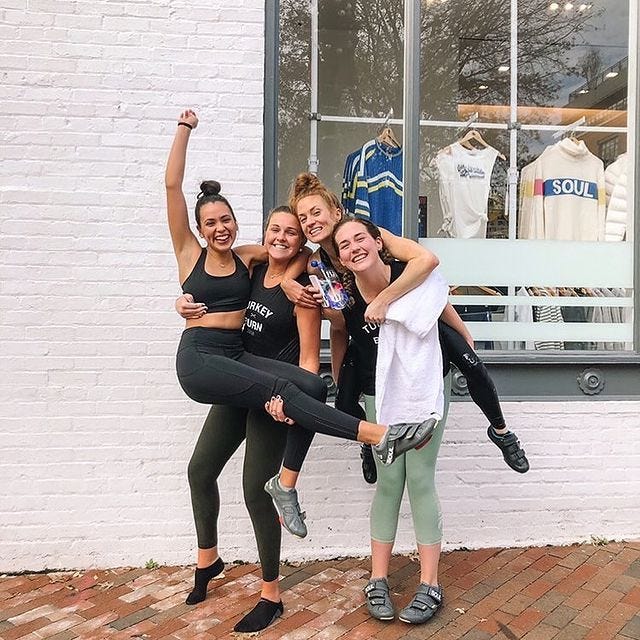
Take, SoulCycle, for example. The addictive fitness experience has a rare ability to make people feel like they’re a part of something bigger. Riders feel a sense of belonging within the like-minded exercise community, as they share common goals in improving their health, body, and mind. Instructors establish personal connections with the audience and frequent attendees form bonds with other riders. This strong sense of community, in part, drives riders to pay upscale prices—for rides ($36) and SoulCycle branded sweatshirts ($118) and tanks ($68)—and keeps them coming back for more.
One of the best business strategies is to gain an edge on understanding the people you serve. In my view, establishing empathy—through a mutual understanding, a common mission, or building a sense of community—is one of the most developed forms of understanding others. It allows for superior relationships, insight, and perspective.
As I said, eliciting empathy is challenging. It won’t happen overnight. Creating a strong connection with your consumers is a long-term strategy. That said, for consumer-facing brands, marketing with humanization at its core is increasingly becoming table stakes.
Consumers have more choice than ever before. When we become overwhelmed by the flood of options, the best we can do is choose what matters to us most. If consumers don’t have an affinity for your brand, it will get lost in the noise.